Statement Coats That Do All the Talking
Quick Answer: A statement coat earns its place through one of three qualities — bold color, dramatic shape, or striking texture — never all three at once. Keep everything underneath simple and neutral, and buy the best version you can of a shape you genuinely love. It’s the piece people see most and remember longest, so quality pays back disproportionately here.
Some people look pulled-together every single day from October through March, and you’ve quietly wondered how they have the energy.
They don’t. They have a coat. Underneath it is very often a sweatshirt and yesterday’s jeans, and nobody will ever find out. That’s the actual mechanism behind statement outerwear, and late August is exactly when the good ones land before the real cold arrives.

What Makes a Coat a Statement Coat?
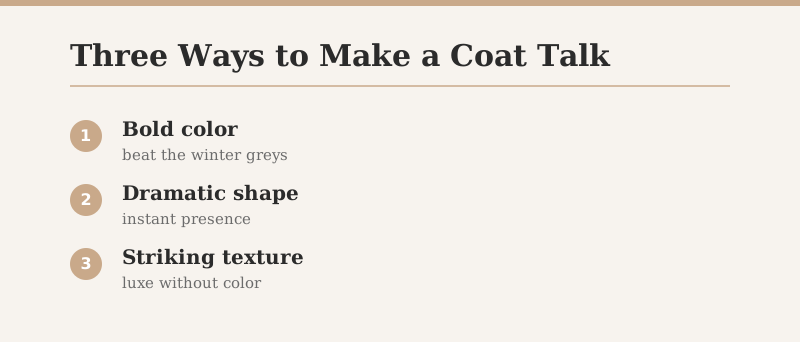
Exactly one of three qualities, taken far enough to be the point of the outfit.
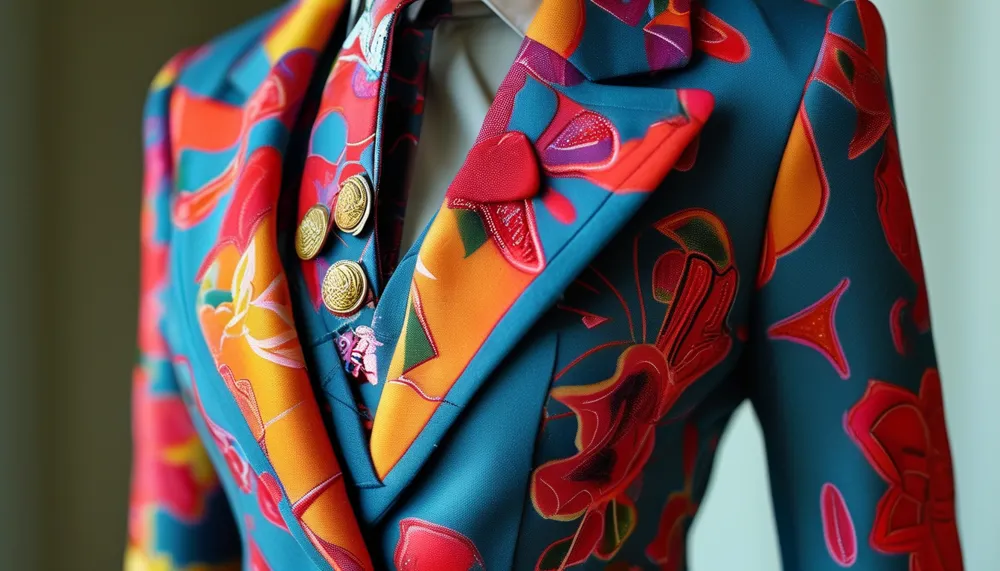
Bold color. Electric blue, hot pink, emerald, marigold, scarlet. Against a winter street of black and charcoal wool, a saturated color coat is visible from a block away — and it’s a genuine mood-lifter on the grim grey mornings when you need one most.
Dramatic shape. An oversized cocoon, a sculptural collar, an exaggerated wrap, a sharply defined shoulder. Shape gives presence without a single loud color, which makes it the more versatile route if you wear a lot of black underneath.
Striking texture. Teddy, faux fur, bold check, boucle, a glossy finish. Texture reads as expensive at a distance and adds richness to an outfit that’s otherwise just jeans and a knit.
The rule that keeps this from going wrong: pick one. A hot pink oversized teddy coat with a sculptural collar is three statements arguing with each other. One quality, executed well, is what reads as deliberate.
How Do You Wear a Statement Coat?
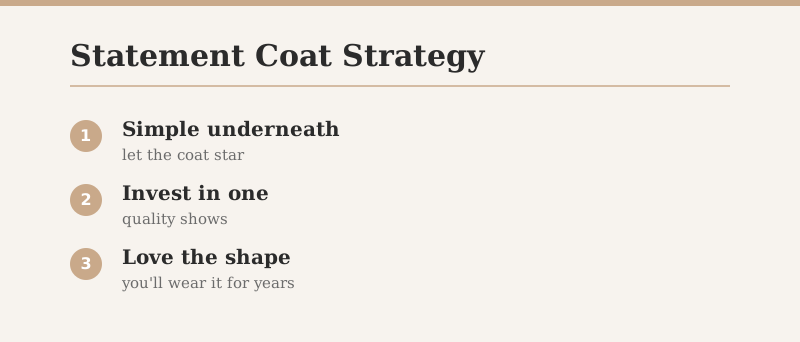
Keep everything underneath quiet. This is the whole discipline. Simple basics in neutral tones give the coat room to do its job — and it’s the happy secret of statement outerwear that the simpler what’s beneath it is, the better the coat looks.
Three reliable formulas:
- Voluminous coat + slim trousers or jeans. The size contrast is the styling. A cocoon coat over a slim leg is a five-second outfit that reads entirely intentional.
- Bold color coat + head-to-toe neutral. Black, cream, or grey underneath. The coat is the only color in the frame.
- Textured coat + simple knit and denim. Texture does the elevating; you’re just providing a clean background.
Two practical notes:
Match your scale. An oversized coat needs a fitted or slim element below it — otherwise the whole silhouette reads as volume with no shape. Same principle as any layering: one relaxed piece, one fitted piece.
Watch the length against your boots. A coat hem that lands mid-calf with mid-calf boots creates an awkward horizontal break. Either go longer than the boot or clearly shorter.

What Nobody Tells You About Buying a Statement Coat
Check the fabric composition before the price tag. A coat that’s at least 50% wool will hold its shape and last years; a mostly-polyester coat at the same price will pill at the friction points by February. For teddy and faux fur, look at the density of the pile — sparse pile flattens permanently within one season.
Buy it a size up if you’ll layer under it. Statement coats are frequently photographed over a t-shirt. You’ll be wearing a sweater. If the shoulders and armholes don’t accommodate a knit, you’ll be cold in your beautiful coat.
Cost-per-wear here is absurd in your favor. A coat worn 5 days a week for 5 months is roughly 100 wears a season. A $400 coat over three seasons is about $1.30 per wear — cheaper than almost anything else you own, and it’s the item people see most and remember longest.
Shoulder fit is the one thing tailoring can’t easily fix. Sleeves can be shortened cheaply and a waist can be taken in. Shoulders are structural and expensive. If the shoulder seam doesn’t sit right, walk away no matter how good the color is.
Late summer is genuinely the best time to look. New season outerwear lands in stores from August, which means full size runs on the shapes and colors that sell out by November. Last season’s statement coats are also at their deepest markdowns right now.
Care for it or it stops making the statement. Brush wool coats after wear, store on a wide wooden hanger (wire hangers destroy shoulders), and dry clean sparingly — twice a season is plenty for most.
Which Statement Coat Should You Buy First?
If you’re buying one, buy for the life you actually have:
- Mostly commuting and errands? A bold color in a classic shape. It works over everything and doesn’t fight with a bag strap.
- Mostly casual and weekends? A textured teddy or check. Comfortable, forgiving, and reads expensive over jeans.
- Want maximum impact for minimum wardrobe change? A dramatic shape in a neutral. It elevates every outfit you already own without needing a single new thing underneath.
Buy the best version you can afford of a shape and color you genuinely love — not the one that’s trending. The trending one gets worn two seasons; the one you love gets worn for a decade.

Mini FAQ
How much should you spend on a statement coat?
Enough to get real fabric content — wool blends over synthetics — since that’s what determines whether it holds its shape past one season. Given roughly 100 wears a season, spending more here has a far better cost-per-wear return than almost any other garment.
Can you wear a statement coat every day?
Yes, and that’s largely the point. Because what’s underneath changes and the coat is what people see, it reads as a signature rather than a repeat.
What color statement coat is most versatile?
Camel, deep burgundy, and forest green all read as statements while still going with most of what you own. If you want maximum impact instead of maximum versatility, saturated cobalt and true red cut through a grey winter street best.
TL;DR:
- Pick one statement quality: bold color, dramatic shape, or striking texture. Never all three.
- Keep everything underneath simple and neutral — the coat is the outfit.
- Pair volume with a slim leg, and mind the hem-to-boot break.
- Check wool content, buy with room for a sweater, and never compromise on shoulder fit.
- At ~100 wears a season, a good coat is roughly $1.30 per wear — and late summer is when the full size runs land.
Keep Reading
This article is for general styling and informational purposes only. Trends, sizing, availability and pricing may vary by brand and season.