Rain, Styled: The Wet-Weather Wardrobe That Refuses to Surrender
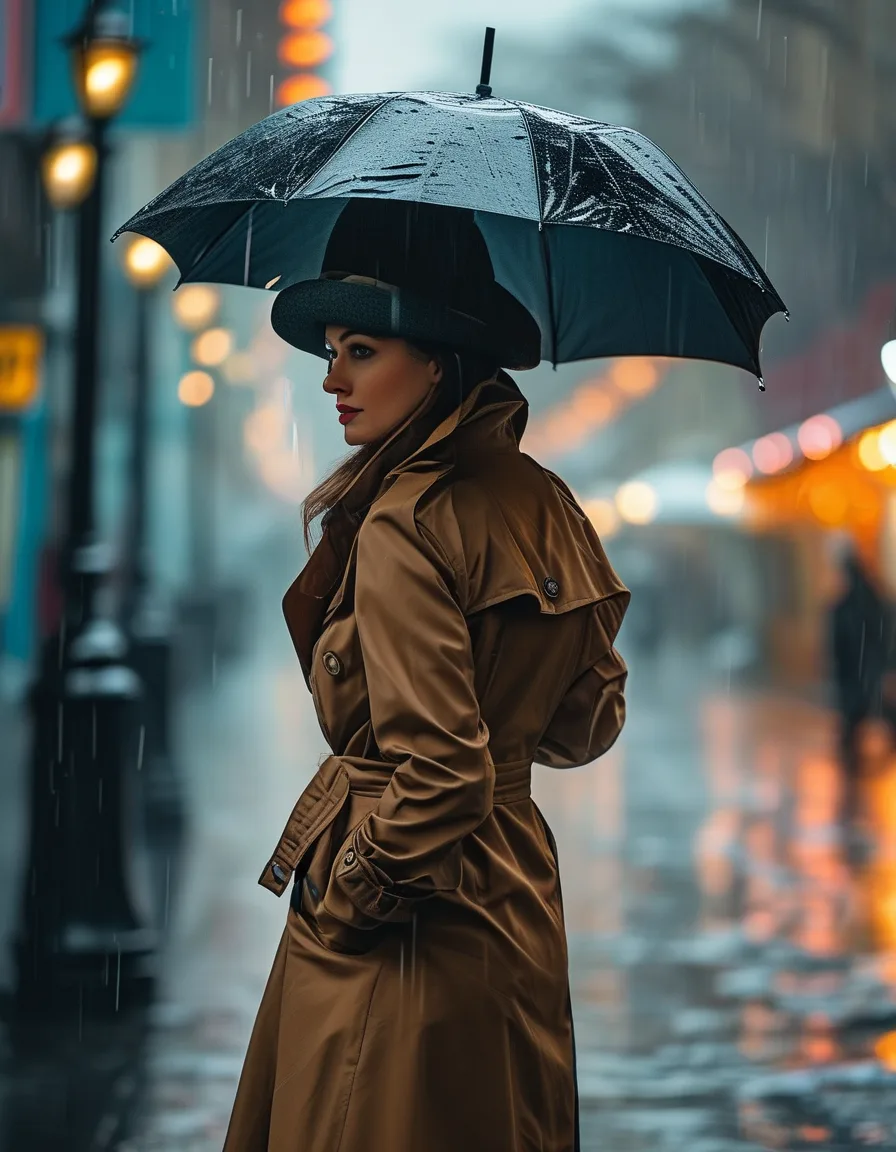
Rain days default to surrender — the shapeless anorak, the ruined shoes, the given-up hair — while the wet-weather wardrobe done right is its own aesthetic: the trench, the rubber boot reinvented, the umbrella as accessory. The rain-style guide.
The Problem
Why rain defeats style: the surrender default (the weather treated as a style exemption — the worst-outfit-of-the-week pattern; the rain days being MANY days in most climates: the surrendered days adding up), the gear-aesthetic gap (the technical rainwear designed for trails, worn to offices — the function-only look per the register logic), the casualty list (the suede destroyed, the hems soaked, the hair abandoned — the damage-avoidance driving the ugly choices), and the reframe (the rain as a styling genre with its own icons — the trench-in-the-rain cinema, the Scandinavian wet-weather polish; the weather out-dressed, not endured per the confidence logic).
The Wet-Weather Wardrobe
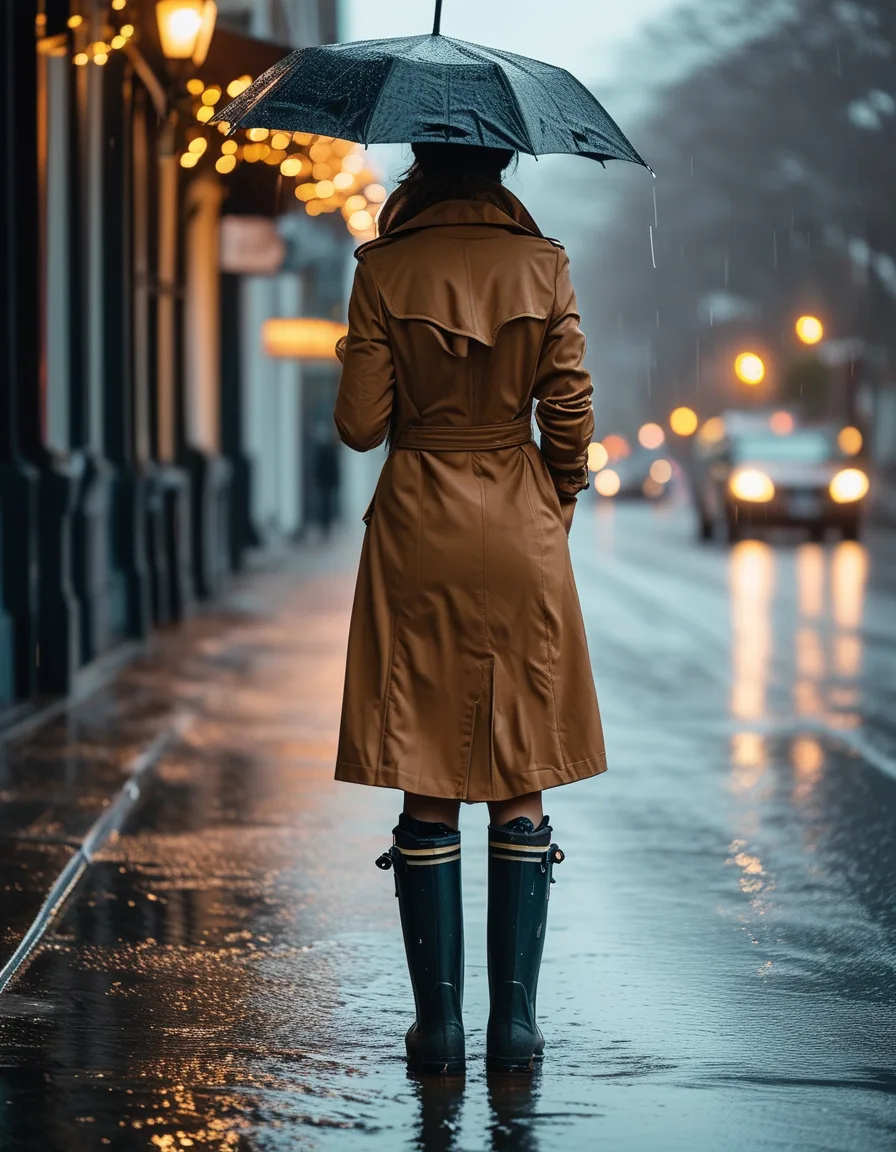
The build: the trench anchor (the classic trench being BORN for this — the water-resistant gabardine heritage per the trench logic; the belted silhouette that stays styled), the elevated-raincoat tier (the clean-lined rubberized coats — the Scandinavian minimal rain aesthetic; the color opportunity: the rain coat as the gray-day pop per the color logic), the rain-boot renaissance (the Chelsea-rubber and loafer-rubber hybrids — the ankle rain boot reading like a shoe per the shoe logic; the classic wellington for the committed; the puddle-proof that’s polished), the water-friendly bottoms (the cropped hems clearing puddles — the ankle-length as rain strategy per the hemline logic; the quick-dry and dark-wash tiers; the suede-and-silk benched per the fabric logic), the umbrella as accessory (the good umbrella in a deliberate color — the wind-proof construction being the real spec; the umbrella upgraded from afterthought), and the bag protection (the leather swapped-or-treated per the leather logic — the water-friendly nylon-tote tier per the bag logic).
The Puddle-Day Styling
The craft: the rain-day formula (the trench, cropped trouser, rubber-ankle-boot, colored umbrella stack — the polished-wet-day uniform per the uniform logic), the hair strategy (the rain-proof styles from the wind-hair logic — the slick bun and braid embracing; the hood-versus-hair negotiation; the fighting-the-frizz surrender to deliberate texture per the air-dry logic), the layering interaction (the rain shell over the swing-day stack per the transitional logic — the wet-layer kept away from the silk per the silk logic), the color psychology (the gray-day brightness case — the red umbrella against the monochrome rain per the accent logic; the all-black-rain-chic alternative), the office-arrival protocol (the wet-layer management at the desk per the commute logic — the shoe-swap system; the damp-trench hanging), the care aftermath (the wet leather blotted-and-air-dried per the leather logic — the trench dried before the closet), and the closing frame (the rain claimed as a genre — the trench belted, the boots polished-proof, the umbrella chosen; the wet days styled at the same standard as the dry; the surrender, cancelled). Trench and rubber-ankle boots, cropped hems, one bright umbrella: the rain, out-dressed.
Rain is a styling genre, not an exemption: the belted trench was born for it, ankle rain boots now read like shoes, cropped hems clear puddles, and the good umbrella in a deliberate color is an accessory. Bench the suede and silk, run the shoe-swap at the office, embrace the slick bun — the surrendered rain days add up, and the uniform ends them.
Keep Reading
This article is for general styling and informational purposes only. Trends, sizing, availability and pricing may vary by brand and season.