The Outerwear Edit

Coats & jackets that make the outfit

The Coat Sabbatical: Storing Winter Outerwear Properly All Summer

2026-07-15

Every winter coat spends the summer in one of two states. Crushed at the dark end of the closet, absorbing whatever the season throws at it. Or on a proper sabbatical — cleaned, hung right, moth-defended — and emerging in November exactly as good as it left.

Quick Answer: Store winter coats clean, on wide shaped hangers, inside breathable cotton garment bags, away from sunlight, with cedar refreshed by sanding every 6–8 weeks. Dry-clean wool and cashmere before storage and wash down-filled puffers; invisible body oils are what attract moths and set into permanent stains by September. Never store puffers compressed — a summer in a compression sack permanently reduces loft.

The Coat Sabbatical: Storing Winter Outerwear Properly All Summer

At a glance

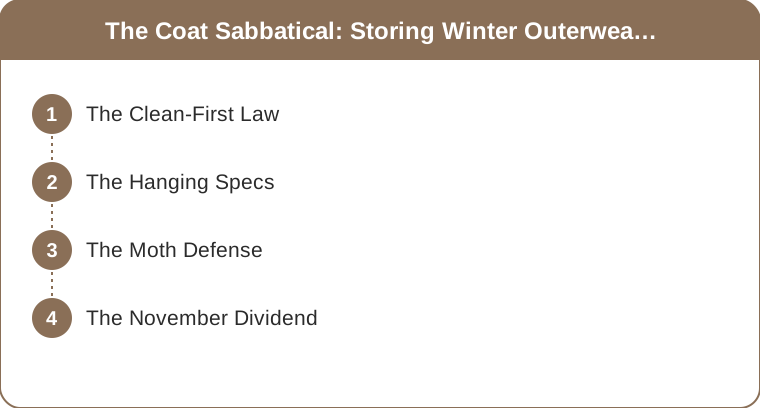
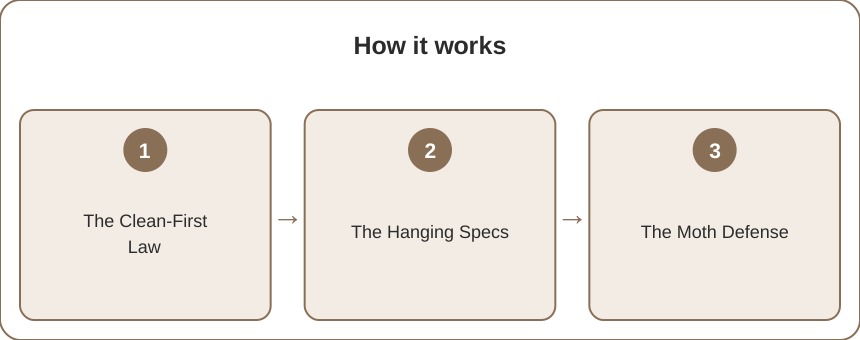
Why Does a Coat Have to Be Clean Before Storage?

Because moths don’t eat wool. They eat what’s on the wool.

Clothes-moth larvae are drawn to keratin, sweat salts, skin oils, and food residue. A coat that looks perfectly clean has three months of collar oils, cuff grime, and city particulate sitting invisibly in the fibers — which is a dinner invitation with your name on it.

The second reason is chemistry. A faint stain in March is a set, oxidized, permanent stain by September. Sugars caramelize. Oils darken. Four months of warm closet air does to a spill what a decade wouldn’t do in winter.

The protocol:

  • Wool, cashmere, tailored coats: dry-clean before storage, every year, without negotiation
  • Down puffers: machine wash on gentle with a down-specific detergent, then tumble dry low with 2–3 dryer balls until fully lofted — usually 60–90 minutes
  • Technical shells: wash per the care label and reapply DWR spray while you’re at it
  • Leather and shearling: professional clean only, and never seal them in plastic

Skip this step and every other step below is decoration.

What Are the Right Hangers and Spacing?

Wire hangers are the single most expensive free thing in your closet. Four months of concentrated weight on two narrow points leaves shoulder dents that are semi-permanent in wool and effectively permanent in a structured coat.

  • Wide shaped hangers (2 inches or thicker at the shoulder) for anything wool or tailored
  • Breathable cotton or canvas garment bags — never vinyl or dry-cleaner plastic, which traps humidity against the fibers and can yellow them
  • 2–3 inches of air between garments. Crushed coats hold moisture and set creases
  • The puffer exception: hang loosely uncompressed, or fold gently into a breathable bin. A summer inside a compression sack can cut loft substantially and it does not fully recover
  • Knitwear rule: heavy knit outerwear gets folded, not hung, because the shoulders stretch under their own weight

One placement note: store away from exterior walls and anywhere sunlight reaches. UV fades shoulders and sleeves unevenly, and the result only becomes obvious in November when the coat comes out two shades lighter on one side.

The Coat Sabbatical: Storing Winter Outerwear Properly All Summer

How Do You Actually Keep Moths Out?

Cedar works — but only while it smells like cedar. The aromatic oils that repel larvae evaporate within a couple of months, and a scentless cedar block is a piece of wood.

  • Sand your cedar blocks lightly every 6–8 weeks with fine-grit paper to expose fresh surface. Thirty seconds per block, twice a summer
  • Lavender sachets are auxiliary, not primary. They help; they don’t hold the line alone
  • Sealed-but-breathable containers for knit outerwear — a cotton bin with a lid beats an open shelf
  • Vacuum the closet floor before storage. Larvae and eggs live in lint and dust, not in the air
  • Run one mid-summer inspection. Mid-August is the ideal check: pull out two or three pieces, look at the collar and underarm seams, and refresh the cedar

Mothballs are the option nobody enjoys. They’re genuinely effective and the smell takes months to leave the fabric, so most people trade a small risk for a wearable coat.

5 Mistakes Everyone Makes

  1. Storing “it looks clean.” The coat that comes out with a mystery mark is always the one that looked fine going in.
  2. Leaving it in dry-cleaner plastic. That bag is for the drive home. It traps solvent fumes and humidity, and it yellows fabric over a season.
  3. Compressing the puffer. Space-saver bags are for bedding. The loft that keeps you warm is the loft you just squashed for four months.
  4. Trusting a cedar block bought in 2021. No scent, no protection. Sand it or replace it.
  5. Storing in the basement or attic. Humidity swings breed mildew; heat swings degrade adhesives and coatings. Interior closets win every time.

The fifth one costs the most, because a mildewed cashmere coat is rarely salvageable.

What Do You Get Back in November?

The sabbatical coat comes out pressed by hanging, unfaded, moth-free, and genuinely clean. You put it on and leave.

The crushed-corner coat comes out needing a dry-clean, a steam for the shoulder dents, and a lint-roll for whatever it collected — plus, occasionally, a repair estimate. That’s a week of delay and a bill, during the exact cold snap you needed it for.

Call it twenty minutes of June protocol buying a November of just putting it on. Moths bill in cashmere; the defense bills in cedar.
How it works

FAQ

Do I really need to dry-clean a coat I only wore a few times?

If it touched your skin, yes. Collar and cuff oils transfer within a single wear, and those are exactly what moth larvae feed on. A few wears is enough to make it worth the cost.

Are vacuum-seal bags ever okay for outerwear?

Not for anything insulated or napped. They permanently flatten down loft and crush wool pile. For flat cotton or technical shells they’re acceptable, though a breathable bin is still better.

How do I get the musty closet smell out in the fall?

Hang the coat in fresh air out of direct sun for a few hours, or steam it lightly. If the smell persists, that’s mildew rather than staleness, and it needs a professional clean before you wear it.

TL;DR:

  • Clean first — body oils and food traces are what attract moths, not the wool itself
  • Wide shaped hangers, cotton garment bags, 2–3 inches of air between pieces
  • Never store puffers compressed; loft lost in a compression sack doesn’t fully return
  • Sand cedar blocks every 6–8 weeks or they stop working entirely
  • Interior closet only — no basements, attics, or exterior walls
  • Run one mid-summer inspection to catch problems while they’re still small

Clean first, wide hangers, cedar refreshed, loft uncompressed. The winter coat’s summer was always going to happen — the protocol just decides what state it wakes up in.

Keep Reading

This article is for general styling and informational purposes only. Trends, sizing, availability and pricing may vary by brand and season.

coat storagewinter coat summerouterwear care

← All articles